Which Is the Best Computer Display Supplier in China?

Choosing the best computer display supplier in China requires more than comparing online prices. A reliable decision begins with evidence, factory experience, and clear technical requirements. Buyers should examine panel quality, touch performance, brightness, viewing angles, and operating temperature. These details become important when a display faces sunlight, vibration, or continuous use.

A professional supplier should provide product samples, factory information, quality certificates, and documented testing procedures. Ask how the company checks dead pixels, color consistency, bonding strength, and electrical safety. Request a sample before approving mass production. Small flaws often appear during real installation. That is where assumptions fail.

Experience also matters. Suppliers serving medical, industrial, automotive, or retail applications may understand different compliance and durability needs. However, impressive claims are not enough. Verify production capacity, component sources, inspection records, and after-sales support. A responsive engineer can prevent costly misunderstandings about connectors, mounting holes, or custom housings.

Communication should remain precise. Confirm drawings, software compatibility, packaging standards, lead times, and warranty terms in writing. The cheapest quotation may exclude testing, customization, or replacement support. It may not be the best value.

This guide compares practical supplier criteria for international buyers. It focuses on measurable performance rather than polished marketing. No supplier is perfect. Even strong manufacturers can experience delays or inconsistent batches. Careful evaluation reduces those risks and supports a more dependable purchasing decision.

Which Is the Best Computer Display Supplier in China?

What Makes a Computer Display Supplier the Best in China?

Which Is the Best Computer Display Supplier in China?

The best computer display supplier in China is not simply the one offering the lowest quotation. Strong suppliers combine stable manufacturing, clear communication, and measurable quality control. During supplier evaluations, I look for sample consistency, panel brightness, color accuracy, viewing angles, and response time. Details matter.

A reliable supplier should explain its production process without hiding behind vague promises. Ask for factory audit records, product test reports, material traceability, and realistic delivery schedules. Request several samples from different production batches. Compare them under the same lighting conditions. Small differences can reveal weak process control. A supplier with experienced engineers can also adjust resolution, housing design, connectors, and mounting options for specific projects. That practical support often saves time during installation.

After-sales service is equally important. The supplier should define warranty terms, replacement procedures, and response times before an order begins. Clear documents build trust. So does honest communication about limitations. No supplier is perfect. I once underestimated packaging quality, and minor screen damage appeared after transport. That mistake changed my evaluation process. Now I check vibration protection, carton strength, and moisture resistance during sample approval. The best supplier is the one that provides evidence, accepts questions, and keeps improving when problems appear. Reliability grows through repeated deliveries, not impressive claims.

Which Is the Best Computer Display Supplier in China?

What Makes a Computer Display Supplier the Best in China?

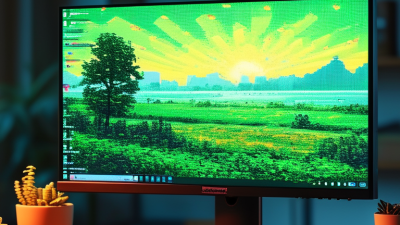
The strongest suppliers are typically evaluated by a combination of product quality, production capability, customization, compliance, delivery performance, and after-sales support. The chart shows a practical purchasing-weight model for comparing suppliers without relying on company or brand data.

Quality control and production capacity receive the highest weighting because they directly affect display reliability, consistency, and order fulfillment. Compliance, customization, delivery performance, and support are also essential for long-term international procurement.

China’s Leading Computer Display Supplier Categories

Which Is the Best Computer Display Supplier in China?

China’s Leading Computer Display Supplier Categories

China’s display supply market is divided into clear categories. OEM and ODM suppliers support global computer manufacturers with panels, housings, circuit boards, and complete assembly. Their strength is scale. IDC’s Worldwide Quarterly Monitor Tracker reported about 125 million monitor shipments worldwide in 2023, showing the value of stable production capacity.

Commercial display suppliers serve offices, schools, control rooms, and public facilities. They usually provide longer product lifecycles, stronger mounting systems, and documented quality controls. Gaming display suppliers focus on high refresh rates, low response times, adaptive synchronization, and curved panels. TrendForce’s market research has repeatedly identified gaming monitors as a major growth segment, supported by demand for larger screens and higher refresh rates.

Portable monitor suppliers target mobile workers and compact workspaces. Medical and industrial suppliers require stricter brightness consistency, thermal testing, and traceability. These categories need different engineering teams. One factory rarely excels at all of them.

I would judge a supplier through factory audits, sample testing, and after-sales records. ISO 9001 certification helps, but it cannot replace production evidence. Check gray uniformity beside a window. Measure USB-C power delivery under load. Ask for failure-rate data, not only attractive catalogs.

There is no perfect category. A supplier with excellent pricing may still lack firmware support. That weakness matters. Clear specifications, realistic lead times, and transparent test reports remain stronger indicators than a polished showroom.

How to Compare Chinese Computer Display Suppliers

Which Is the Best Computer Display Supplier in China?

How to Compare Chinese Computer Display Suppliers

Choosing the best computer display supplier requires more than comparing unit prices. Request identical samples from several factories and test them under the same conditions. Check brightness, contrast, viewing angles, color accuracy, pixel defects, and response time. A display may look impressive in a showroom but perform differently under office lighting.

Ask for production details, not only sales promises. A reliable supplier should explain panel sources, backlight testing, aging procedures, and final inspection records. Review certifications relevant to your target market, along with warranty terms and replacement procedures. Confirm minimum order quantities, sample charges, lead times, packaging strength, and export documents. Small details matter. A damaged corner can erase a low-price advantage.

Factory visits or independent inspections add useful evidence. Watch how workers handle screens, record serial numbers, and separate defective units. During one comparison, packaging received less attention than panel quality, which caused avoidable transport damage. That mistake changed the evaluation process. Request a pilot order before placing a large purchase. Track defect rates, communication speed, and whether the supplier corrects problems without excuses. No supplier is perfect. The strongest partner is usually the one that documents weaknesses, responds clearly, and improves after feedback.

Which Is the Best Computer Display Supplier in China? - How to Compare Chinese Computer Display Suppliers

Anonymized comparison framework for evaluating computer display manufacturers and export suppliers

Comparison Criterion Supplier A Supplier B Supplier C Supplier D
Primary Positioning Cost-efficient standard monitors Mid-range commercial displays Gaming and high-refresh displays Project-based and custom displays
Typical Screen Sizes 21.5–27 inches 23.8–32 inches 24–34 inches 15.6–55 inches
Common Resolution Options Full HD; selected QHD models Full HD, QHD and 4K UHD Full HD, QHD and 4K UHD Full HD to 4K UHD, depending on project
Refresh Rate Range 60–100 Hz 60–165 Hz 100–240 Hz 60–165 Hz
Panel Technology IPS and VA IPS, VA and selected OLED options Fast IPS and VA IPS, VA and touch-enabled options
Typical Factory MOQ 100–300 units per model 200–500 units per model 300–800 units per model 50–200 units for custom projects
Sample Lead Time 7–15 calendar days 10–20 calendar days 10–25 calendar days 15–30 calendar days
Mass-Production Lead Time 25–40 calendar days 30–45 calendar days 35–55 calendar days 40–70 calendar days
Customization Capability Logo, carton and menu language Logo, stand, firmware and packaging Logo, cooling design, firmware and packaging Housing, electronics, touch, firmware and packaging
Typical Interface Options HDMI, VGA and DisplayPort HDMI, DisplayPort, USB-C and USB hub HDMI, DisplayPort, USB-C and audio output HDMI, DisplayPort, USB-C, USB hub and project-specific ports
Quality Management Evidence Incoming inspection and final functional testing IQC, IPQC, OQC and aging tests IQC, IPQC, OQC, aging and performance testing Project-specific inspection plan and reliability validation
Common Compliance Documents CE, FCC, RoHS and product test reports CE, FCC, RoHS, REACH and applicable safety reports CE, FCC, RoHS, REACH and market-specific reports Compliance package prepared according to destination market
Warranty Term 12 months 24 months 24–36 months, depending on model 12–24 months, according to project contract
After-Sales Support Remote support and replacement parts Remote diagnosis, spare-parts planning and RMA process Technical support, firmware assistance and RMA process Dedicated project support and customized service terms
Best Fit For Entry-level retail, education and office orders Office, business and distribution channels Gaming, performance and enthusiast markets Kiosks, industrial applications and private-label projects
Main Evaluation Risk Higher model-to-model variation at low prices Higher purchase cost than entry-level suppliers Longer component planning and higher MOQ Longer development cycle and more complex validation
Overall Suitability Best for price-sensitive standard orders Best balanced option for regular business use Best for high-refresh and gaming requirements Best for customization and specialized applications
Recommended comparison practice: Request the same specification sheet, sample test report, warranty terms, compliance documents, packaging details and total landed-cost quotation from every shortlisted supplier before making a final decision.

Key Factors in Supplier Quality and Manufacturing Capability

Choosing the best computer display supplier in China requires more than comparing prices. Quality begins with controlled materials, stable production lines, and measurable inspection procedures. Ask how panels, backlights, controllers, and casings are tested before assembly. A reliable supplier should provide traceable records for brightness, color accuracy, dead pixels, power use, and durability.

Manufacturing capability matters just as much. Visit the facility, if possible. Observe clean assembly areas, calibrated testing equipment, and organized component storage. Confirm whether the supplier manages tooling, sample development, pilot runs, and mass production internally. Experienced engineers should explain tolerance limits clearly, not hide behind general promises. Production capacity should also match your order schedule. An impressive factory can still fail when its planning system is weak.

No factory is perfect. That matters. During evaluation, request recent quality reports, corrective-action records, and examples of repeated defects. A supplier that discusses problems openly may be more dependable than one showing only polished samples. I would also test several production batches, not just one prototype. Small differences in color, frame gaps, or connector fit can appear later. Independent inspection can add confidence, although it cannot replace strong factory controls. Clear communication, documented changes, and realistic delivery commitments often reveal the supplier’s true professionalism. Mistakes happen; poor responses create the larger risk.

How to Select the Right Supplier for Your Business Needs

Choosing the best computer display supplier in China requires more than comparing unit prices. According to IDC’s Worldwide Quarterly PC Monitor Tracker, global monitor shipments reached about 125 million units in 2023, despite a yearly decline. This pressure encourages suppliers to compete aggressively. Low prices can hide weaker panels, inconsistent color, or unstable component sourcing.

Start with your business use case. Office buyers may prioritize low power consumption, reliable stands, and simple warranty handling. Design studios need measured color accuracy, uniformity, and documented calibration procedures. Gaming projects require refresh-rate testing, response-time records, and careful inspection for dead pixels. Ask for three production samples, not one showroom unit. Test them for brightness, color deviation, ports, heat, and sleep-mode behavior. Small details matter.

Supplier verification should include factory capacity, quality-control records, export experience, and traceable component lists. Omdia’s display industry research repeatedly shows that panel supply and technology cycles can change quickly, so confirm the panel source before signing a long contract. Request an independent pre-shipment inspection. Also review ISO 9001 evidence, warranty exclusions, repair lead times, and spare-part availability. I once focused too heavily on a competitive quotation; the sample looked excellent, but later units showed visible brightness variation. That mistake was avoidable. A written acceptance standard would have exposed it earlier. Do not trust promises alone. Use measurable criteria, staged orders, and payment terms linked to inspection results.