China Top 10 Industrial Display Manufacturers?
China’s industrial display sector serves factories, control rooms, transport systems, medical equipment, and outdoor kiosks. This guide examines ten notable manufacturers through practical, evidence-based criteria. The focus is not only on company size. Product consistency matters more.
An industrial display must remain readable beside vibrating machinery, under harsh lighting, or inside dusty enclosures. We consider screen brightness, touch performance, operating temperature, ingress protection, panel lifespan, and mounting flexibility. Certifications, quality systems, technical documentation, and after-sales support also influence the evaluation. Factory experience matters. A display that looks impressive in a brochure may perform differently after months of continuous operation.
This ranking should not be treated as permanent. Market data changes, product lines evolve, and some manufacturers disclose more information than others. That creates an unavoidable limitation. We compare published specifications with customer-facing evidence, industry experience, and realistic application needs. Where information is incomplete, the article identifies uncertainty instead of presenting assumptions as facts. Procurement teams should still request samples, test sunlight visibility, inspect connectors, and confirm warranty terms before ordering. Small details can decide success. A reliable industrial display should fit the complete system, not merely match a screen-size requirement. There is no universal winner. The strongest choice depends on workload, environment, integration requirements, budget, and long-term service expectations.
Industrial Display Manufacturing in China: Scope and Key Definitions
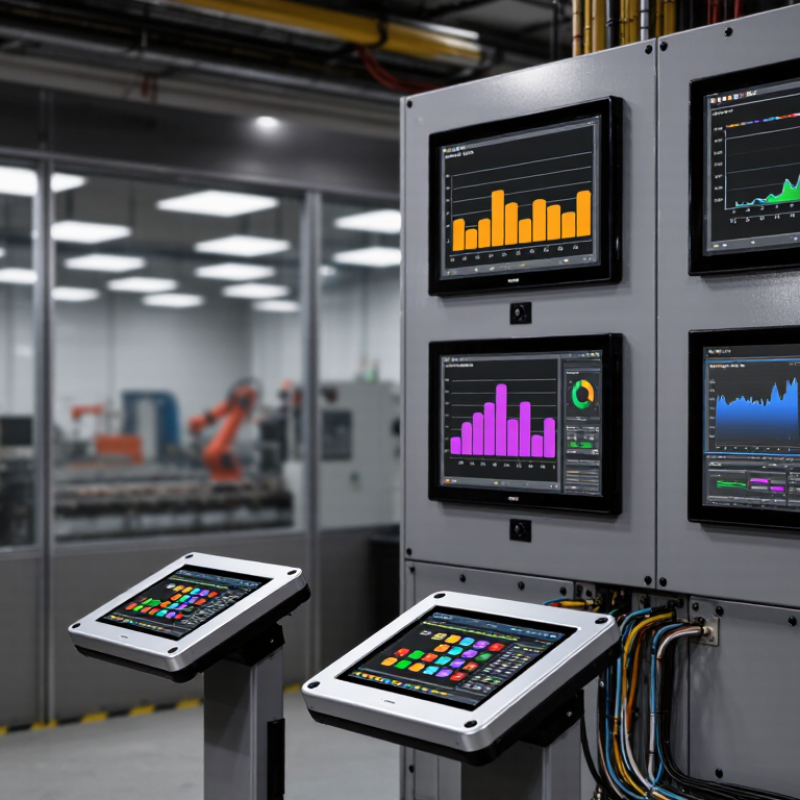
Industrial display manufacturing in China covers more than screen assembly. It includes HMI panels, embedded monitors, rugged terminals, and sunlight-readable displays. The boundary is not perfectly clean. A metal enclosure alone does not make a display industrial. Buyers should examine operating temperature, vibration resistance, ingress protection, touch durability, and long-term component availability. IEC 60529 ratings, such as IP65, describe enclosure protection, not complete product reliability.
Demand is closely linked to factory automation. The International Federation of Robotics reported 276,288 industrial robot installations in China during 2023. That represented about 51% of global installations. The figure does not measure display demand directly. However, it shows why machine interfaces, control panels, and production-line monitors require local manufacturing capacity. A practical top-ten comparison should therefore assess engineering validation, optical performance, lifecycle support, customization speed, and documented testing. Price alone is a weak filter.
Tips: Request sample units before approval. Test touch input with gloves, dust, and oil residue. Check brightness after thermal cycling. Ask for failure-rate data and repair procedures. Some suppliers provide impressive specifications but limited field evidence. That gap deserves attention.
Sources: International Federation of Robotics, World Robotics 2024; IEC 60529, Degrees of Protection Provided by Enclosures.
How China’s Industrial Display Market Has Developed
China Top 10 Industrial Display Manufacturers?
China’s industrial display market has moved from basic panel assembly toward complete, application-focused systems. Touchscreens now appear beside robotic arms, packaging lines, warehouse vehicles, and energy-control cabinets. MarketsandMarkets estimated the global industrial display market at about USD 5.5 billion in 2024, with Asia-Pacific remaining the leading region. China’s manufacturing scale gives local suppliers strong testing grounds.
The development is also linked to smart-factory investment. China’s Ministry of Industry and Information Technology reported 421 national-level intelligent manufacturing demonstration factories by 2023. Each factory needs displays that survive dust, vibration, temperature changes, and continuous operation. Buyers increasingly request sunlight-readable panels, glove-friendly touch control, wide-voltage input, and remote device management. These details matter more than a polished product brochure.
A practical top-ten list should therefore compare more than shipment volume. Engineering support, panel consistency, certification, repair response, and software compatibility deserve equal attention. Omdia’s display research shows China remains central to global panel production, but supply strength does not guarantee industrial reliability. That is the uncomfortable part. Some products look identical on a specification sheet, yet behave differently after months near heat, oil mist, or electrical noise. Field testing is still necessary. Selection should follow the working environment, not only the lowest quotation.
China Top 10 Industrial Display Manufacturers? - How China’s Industrial Display Market Has Developed
| No. |
Market Development Dimension |
Key Period |
Verified Development Fact |
Impact on Industrial Displays |
Reference |
| 1 |
Manufacturing Base |
Since 2010 |
China has remained the world’s largest manufacturing country by manufacturing value added since 2010, according to UNIDO. |
A broad equipment-production base supports local demand for panel PCs, industrial monitors, operator panels and embedded displays. |
UNIDO |
| 2 |
Industrial Automation Adoption |
2013–2023 |
China became the largest annual market for industrial robot installations in 2013 and accounted for more than half of global installations in 2023, based on International Federation of Robotics data. |
Robot cells require reliable human-machine interfaces, touch terminals, control displays and high-availability visualization systems. |
IFR |
| 3 |
Made in China 2025 |
2015 onward |
The Made in China 2025 strategy identified ten priority sectors, including advanced numerical-control machinery, robotics, new-energy vehicles and power equipment. |
Demand expanded for displays designed for machine tools, production lines, vehicle systems, energy equipment and harsh industrial environments. |
State Council |
| 4 |
Industrial Internet |
2017 onward |
China established national industrial-internet development initiatives and promoted the integration of industrial equipment, networks, platforms and applications. |
Industrial displays increasingly serve as connected terminals for data visualization, equipment monitoring and production management. |
MIIT |
| 5 |
Display Panel Supply Chain |
2010s onward |
China developed substantial production capacity for TFT-LCD and AMOLED panels, supporting a large domestic electronics and equipment ecosystem. |
Local access to panel supply improves customization options, size availability and integration flexibility for industrial-display products. |
Display industry data |
| 6 |
Touchscreen Integration |
2010s onward |
Projected-capacitive touch technology became widely used in equipment interfaces, while resistive and infrared touch remained relevant for specific industrial conditions. |
Product selection shifted from display-only units toward integrated touch monitors, panel PCs and operator terminals. |
ISO standards |
| 7 |
Smart Manufacturing |
2016 onward |
China’s intelligent-manufacturing programs promoted digital workshops, smart factories, industrial software and production-data integration. |
Industrial display requirements expanded toward multi-touch operation, real-time dashboards, remote monitoring and system connectivity. |
MIIT |
| 8 |
New Infrastructure |
2020 onward |
China’s new-infrastructure agenda emphasized 5G networks, data centers, artificial intelligence and industrial internet infrastructure. |
More connected factories and edge-computing environments increased demand for networked visualization and control terminals. |
Chinese Government |
| 9 |
Domestic Substitution |
2021 onward |
Industrial policies increasingly encouraged resilient domestic supply chains for core components, industrial software and intelligent equipment. |
Buyers increasingly evaluate lifecycle support, customization, certification, delivery stability and local service alongside display specifications. |
NDRC |
| 10 |
Application Diversification |
Current market |
Industrial display applications now span factory automation, machine vision, logistics, transportation, energy, healthcare equipment, outdoor terminals and process control. |
Competition increasingly focuses on ruggedization, sunlight readability, wide temperature operation, ingress protection, long-term availability and application-specific integration. |
IEC |
Note: This table summarizes China’s industrial-display market development without presenting company names, brand names or company-specific performance data. Market facts should be checked against the latest official publications before commercial use.
The Top 10 Industrial Display Manufacturers in China
The Top 10 Industrial Display Manufacturers in China
China’s top ten industrial display manufacturers serve factories, transport systems, medical equipment, energy sites, and outdoor control cabinets. Their products commonly include panel PCs, touch monitors, embedded displays, and rugged operator terminals. A strong manufacturer should provide clear test records, stable supply, and practical engineering support.
From my experience reviewing industrial display projects, selection starts with the working environment. Check brightness under direct sunlight, touch response with gloves, and screen performance between low and high temperatures. Confirm IP ratings, shock resistance, viewing angles, and expected service life. Factory audits also reveal useful details, including assembly discipline, calibration equipment, and quality traceability.
The best suppliers usually support custom bezels, mounting holes, connectors, operating systems, and interface options. They should explain compliance documents instead of simply displaying certificates. Long-term projects need spare-part planning and consistent panel sourcing. A ranking can mislead when it ignores after-sales response. One manufacturer may offer excellent hardware but weak documentation. Another may communicate well but lack flexible engineering capacity. That matters. Buyers should compare samples, inspection reports, warranty terms, and production lead times before choosing among China’s leading industrial display manufacturers.
Products, Technologies, and Industries Served by the Top 10
China’s top ten industrial display manufacturers typically offer panel PCs, HMI terminals, rugged monitors, and open-frame displays. These products support factory control rooms, machine interfaces, and outdoor equipment. During supplier evaluations, I look beyond screen size and price. Touch accuracy, readable fonts, connector placement, and service access often decide whether a display works well after installation.
Common technologies include TFT and IPS panels, projected capacitive touch, resistive touch, optical bonding, and sunlight-readable backlights. Fanless computers reduce dust-related failures, while wide-temperature components support cold warehouses and hot production floors. Useful interfaces include HDMI, DisplayPort, USB, Ethernet, serial ports, and fieldbus connections. Some manufacturers also provide Linux or Windows compatibility, remote monitoring, and customized enclosures. These details matter.
The main industries served include factory automation, logistics, transportation, energy, medical equipment, retail, marine systems, and smart infrastructure. A sealed IP-rated enclosure can protect a terminal near coolant spray, while a high-brightness screen helps operators read data beside a loading bay. Healthcare systems require careful cleaning and stable operation. Energy sites often need stronger electromagnetic compatibility and longer product lifecycles. No ranking is perfect. One weakness is that published specifications may not show long-term touch drift or repair speed. Buyers should test samples, review failure records, and confirm replacement plans before deployment.
China Top 10 Industrial Display Manufacturers: Market Coverage by Category
Publicly described product, technology, and application coverage across a representative group of ten leading Chinese industrial display manufacturers. Values indicate the number of manufacturers offering each category.
Industrial monitors and TFT-LCD solutions show the broadest market coverage, while factory automation is the most commonly served application. Counts represent category presence rather than market share or revenue.
How to Compare and Select a Chinese Industrial Display Manufacturer
Selecting a Chinese industrial display manufacturer requires more than comparing product catalogues. In factory projects, I have seen a bright screen fail because its touch layer ignored gloves and oil contamination. Start with the operating environment. Record temperature, humidity, vibration, dust, sunlight, viewing distance, and daily operating hours. Ask whether the manufacturer tested the display under these conditions, not only in a showroom. Field evidence matters.
Compare panel technology, brightness, touch response, viewing angles, sealing level, and expected service life. Request complete specifications, test reports, sample units, and drawings before discussing volume pricing. A reliable supplier should explain component sources, quality checkpoints, calibration methods, and warranty limits clearly. Check communication speed too. Delayed answers during sampling may become slower support after installation. Factory visits, video inspections, and conversations with industrial users can reveal production discipline. However, references cannot guarantee future performance. Your enclosure, software, and installation may differ.
Evaluate engineering support from prototype development through replacement. Confirm interface compatibility, operating system support, customization limits, spare-part availability, and repair procedures. Ask how failed units are analyzed and documented. Total cost includes integration labor, shipping protection, downtime, and future parts, not just the quoted screen. I once underestimated cable routing, and the final mounting depth caused unnecessary redesign. Leave room for mistakes. A small pilot run can expose weak touch calibration, uneven backlighting, or unstable connectors before a larger order. Choose a manufacturer that provides measurable evidence, answers technical questions, and communicates limitations honestly.