How to Choose the Best Industrial Display for Your Needs?
Choosing the right industrial display is crucial for operational efficiency. According to a recent report by Markets and Markets, the global industrial display market is expected to reach USD 10.87 billion by 2025, growing at a CAGR of 6.3%. This emphasizes the increasing reliance on advanced display technologies across various sectors.
Industrial displays serve diverse applications, from factory automation to outdoor signage. However, the options can be overwhelming. Different environments require specific characteristics like temperature resistance, brightness, and durability. Understanding these requirements can prevent costly mistakes.
Yet, selecting the best industrial display often leaves room for reflection. Are you prioritizing functionality over aesthetics? Are your decisions influenced by vendor marketing rather than your unique needs? Evaluating these aspects will lead to more informed choices. It's essential to align your industrial display selection with your specific operational demands for optimal performance.
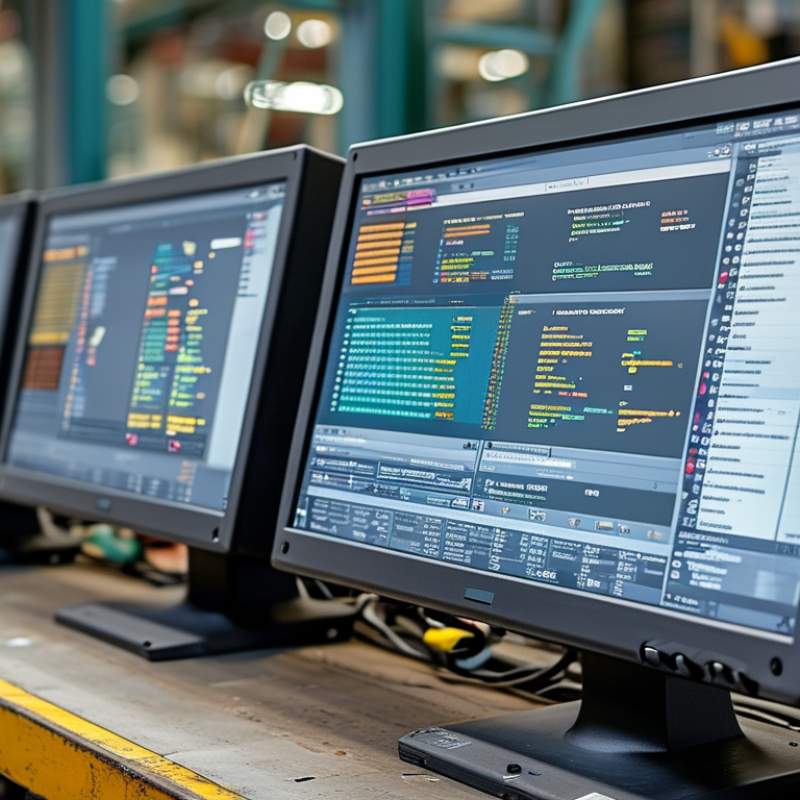
Understanding the Different Types of Industrial Displays Available
When selecting an industrial display, understanding the types available is crucial. Different environments require specific features. For instance, a display used in a factory may need to withstand harsh conditions. These can include extreme temperatures, dust, or vibrations. Moreover, displays come in various sizes and resolutions, each serving distinct purposes.
Resistive and capacitive screens are common types. Resistive screens are durable and often work with gloves. They are suitable for environments where precision matters. In contrast, capacitive screens offer better clarity but can be less durable. Choosing the right one depends on the interactive needs of your operations.
Other factors to consider are brightness and response time. A brighter display enhances visibility in well-lit spaces. Quick response time is critical in fast-paced industrial settings. Additionally, evaluating the mounting options can help ensure stability. Take your unique operational conditions into account while selecting the right solution. Reflect on how these factors align with your specific needs.
How to Choose the Best Industrial Display for Your Needs?
| Display Type |
Resolution |
Size (inches) |
Brightness (cd/m²) |
Operating Temperature (°C) |
Special Features |
| LCD |
1920 x 1080 |
22 |
300 |
-20 to 60 |
Touchscreen, Anti-glare |
| OLED |
3840 x 2160 |
55 |
800 |
0 to 50 |
High Contrast, Thin Design |
| LED |
2560 x 1440 |
32 |
500 |
-10 to 70 |
Outdoor Readability, Weatherproof |
| IP65 Rated |
1920 x 1080 |
24 |
800 |
-20 to 60 |
Dust and Water Resistant |
| Repeater Display |
1280 x 720 |
15 |
250 |
-5 to 45 |
Low Power Consumption |
Key Features to Consider in an Industrial Display
When selecting an industrial display, it's vital to consider specific features that enhance functionality and durability. One key feature is the display type. Common options include LCD, OLED, and LED. According to a recent industry report, LCDs are preferred for their affordability and clarity. OLEDs offer superior contrast but come with a higher price tag. Understanding the environment where the display will be used is crucial; some environments require rugged displays that can withstand extreme temperatures or vibrations.
Another important aspect is resolution and size. A higher resolution ensures sharper images, which is essential for detailed tasks. The report indicates that a 1920x1080 resolution is the minimum for most industrial applications, while larger sizes improve visibility from a distance. Touchscreen capabilities can also enhance user interaction, with studies showing they increase efficiency in operations. However, touchscreens might fail in harsh conditions, necessitating a careful assessment of your specific needs.
Durability ratings, such as IP65 or NEMA 4X, are non-negotiable for many industrial settings. High ratings indicate better protection against dust and water. These ratings often correlate with long-term reliability, reducing maintenance costs. However, selecting a highly durable display may involve higher upfront costs. Navigating these choices requires reflection on your operational demands and long-term goals.
Assessing Environmental Factors for Display Selection
Choosing the right industrial display involves understanding environmental factors that affect performance. An industrial setting may expose displays to high temperatures, humidity, dust, or vibrations. Different displays have varying tolerances to these conditions. Therefore, assessing the environment is crucial to avoid future issues.
Evaluate temperature ranges. Some displays may fail in extreme heat or cold. It is important to ensure your display’s specifications match the operating conditions. Humidity can also pose a significant threat. In high-humidity areas, displays with protective casings are preferable to prevent moisture damage.
Assessing dust and vibrations is equally vital. Dust can build up and obscure visibility. Opting for displays with sealed enclosures can mitigate this issue. For environments with high vibrations, consider displays specifically designed for rugged conditions. These often have reinforced structures.
Finding the right balance between functionality and environment requires thought. Sometimes, existing displays may not fit all requirements. Reflecting on past experiences can help shape better choices for future installations. Understanding these factors will lead to more reliable display use.
Evaluating Resolution and Size for Your Application Needs
When selecting an industrial display, understanding resolution and size is crucial. Resolution impacts clarity. Higher resolution offers sharper images. However, more pixels may require more processing power. This can affect overall system performance. Consider the intended purpose of the display. A display used for detailed diagnostic monitoring benefits from higher resolution. Conversely, a display for basic operational data may not need the same clarity.
Size also plays a significant role in usability. A smaller screen may suffice in tight spaces. Yet, if your application involves multitasking, a larger display can improve efficiency. You might face challenges in finding an ideal size that matches your workspace. Consider the viewing distance as well. A display too small could strain the eyes, while an overly large one might overwhelm the space.
It’s essential to balance between resolution and size. Often, higher resolution larger screens are more expensive. Think about future needs, too. Will your requirements change over time? The chosen display should adapt as your needs evolve. Finding this balance requires careful reflection on your specific applications.
Budgeting for Industrial Displays: Cost vs. Performance Factors
When budgeting for industrial displays, it’s crucial to balance cost and performance. The initial expense of a display might seem manageable, but it’s essential to consider long-term value. Cheaper displays might save you money upfront, but could result in higher repair costs or lower efficiency. Think carefully about how often the display will be used. Frequent use demands a more robust solution, even if the price tag is higher.
Performance factors also play a vital role in your decision. Consider brightness, resolution, and durability. A high-resolution display can enhance clarity in critical operations. Meanwhile, brightness affects visibility in various environments, impacting productivity. You might find yourself questioning if lower brightness displays can still meet your needs. It’s worth assessing real-world scenarios where these displays will be applied.
Reflecting on your specific requirements will guide you toward the most appropriate option. Evaluate how your workforce interacts with these displays. Feedback from users can highlight shortcomings that may not be immediately apparent. Ultimately, the right choice blends cost-efficiency with the necessary performance, ensuring that your investment pays off in the long run.
Industrial Displays: Cost vs. Performance Factors