Choosing among China’s top digital signage monitor manufacturers requires more than comparing screen size or factory pricing. Buyers must examine panel quality, brightness, viewing angles, software compatibility, warranty support, and long-term reliability. A display may look impressive in a showroom, yet perform poorly under direct sunlight or continuous commercial use.
This guide explores leading Chinese suppliers across LCD, LED, interactive, and outdoor display categories. Companies such as BOE, TCL CSOT, Hikvision, Absen, Unilumin, Leyard, and Ledman serve different market needs. Some focus on fine-pitch LED walls. Others specialize in commercial monitors, smart displays, or large-format LCD panels. The right choice depends on installation conditions, content strategy, maintenance access, and budget discipline.
Dave Haynes, founder of Sixteen:Nine and a respected digital signage industry commentator, has stated, “Digital signage is not just a screen on a wall.” That reminder matters. A successful monitor digital signage project combines dependable hardware, clear messaging, stable content management, and measurable audience engagement. Small details matter, too: a narrow bezel, readable text, quiet cooling fans, and accessible replacement parts can shape daily performance.
No manufacturer is perfect. Even established brands may have uneven regional service or confusing product lines. Independent testing remains valuable. Buyers should request samples, inspect brightness consistency, confirm operating hours, and review after-sales terms before signing contracts. This overview offers a practical starting point, not a final verdict. Manufacturers change, specifications evolve, and real installation results may challenge polished product brochures.
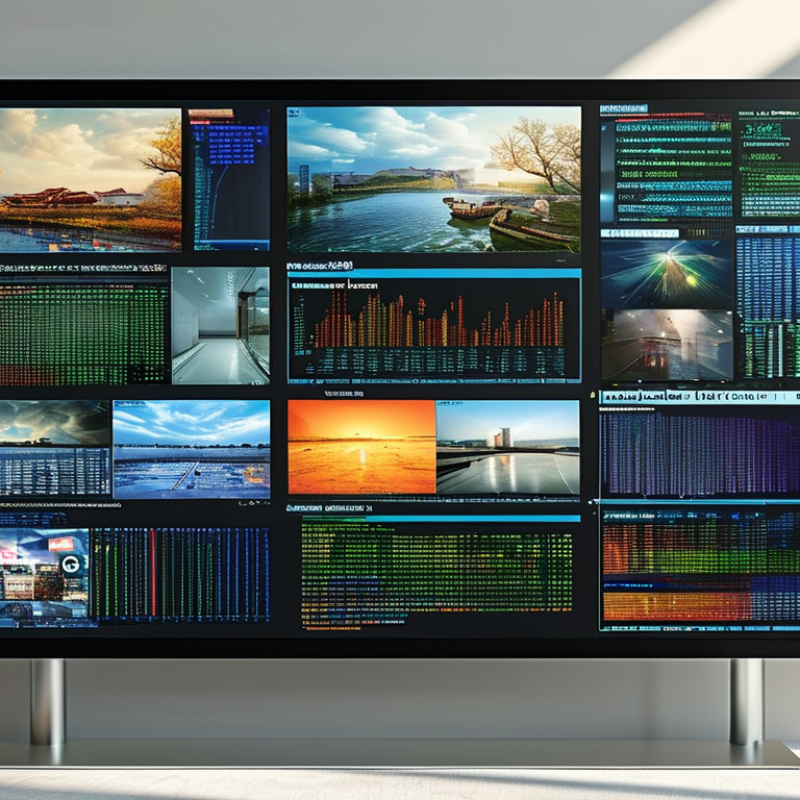
A digital signage monitor manufacturer designs, engineers, tests, and produces commercial display systems for public communication. It is more than a screen reseller. The manufacturer controls key details, including panel selection, brightness, thermal management, media players, firmware, and enclosure durability. In China, strong manufacturers often support custom sizes, wall mounting, outdoor protection, and centralized device monitoring.
Industry data shows why this role matters. Grand View Research estimated the global digital signage market at approximately USD 27.1 billion in 2022, with continued growth through 2030. MarketsandMarkets projected the market could rise from about USD 27.8 billion in 2023 to USD 46.7 billion by 2028. These figures differ because research firms define product categories differently. That difference deserves attention.
In practical factory evaluations, I look beyond resolution claims. A reliable manufacturer should provide brightness test records, burn-in results, operating-temperature data, and documented quality controls. A 4K panel may still fail in a sunny retail window. Weak ventilation can shorten service life. It happens. Manufacturers should also explain warranty coverage, spare-parts availability, software compatibility, and product replacement plans. Relevant certifications and transparent testing records strengthen trust. Buyers should request samples and inspect viewing angles, touch accuracy, cable routing, and remote management before placing large orders. A professional manufacturer accepts these questions. That is a useful signal.
A digital signage monitor manufacturer designs, produces, tests, and supports commercial displays used to deliver scheduled visual content in public or business environments. The table below summarizes practical technical and manufacturing benchmarks without identifying any company or brand.
| Evaluation Dimension | Typical Professional Benchmark | Why It Matters | Recommended Verification Method |
|---|---|---|---|
| Display Size | 32 to 98 inches for indoor signage; larger formats may use video walls or LED systems. | The correct size improves viewing distance, readability, and installation flexibility. | Check the official product specification, active display area, bezel dimensions, and installation drawings. |
| Panel Technology | Commercial LCD panels using LED backlighting; IPS technology is common where wide viewing angles are required. | Panel technology affects viewing angle, contrast, color consistency, and operating stability. | Request the panel type, viewing-angle data, contrast ratio, and color specification in the technical datasheet. |
| Native Resolution | 1920 × 1080 for Full HD and 3840 × 2160 for 4K UHD. | Higher resolution produces sharper text, menus, product images, and promotional videos. | Confirm the native panel resolution rather than only the maximum input resolution. |
| Brightness | Approximately 350 to 700 cd/m² for many indoor applications; higher levels are used in bright storefronts and semi-outdoor areas. | Brightness determines whether content remains clear under ambient lighting and direct reflections. | Review the measured brightness value, test conditions, automatic brightness controls, and anti-glare treatment. |
| Operating Duty | Common commercial ratings include 16/7 or 24/7 operation. | Long daily operating periods require suitable thermal design, components, and firmware reliability. | Check the rated daily operating schedule, thermal test results, burn-in procedure, and service policy. |
| Portrait and Landscape Support | Physical installation support for 16:9 landscape and 9:16 portrait orientation. | Orientation flexibility allows the same display platform to support menus, advertisements, directories, and wayfinding. | Confirm the permitted mounting orientation and whether ventilation, software rotation, or warranty conditions change. |
| Touch Function | Optional projected capacitive or infrared touch technology, depending on screen size and application. | Touch enables self-service kiosks, interactive maps, retail product selection, and visitor information systems. | Test touch accuracy, response time, multi-touch capability, protective glass, and compatibility with the intended operating system. |
| Connectivity | HDMI, USB, Ethernet, Wi-Fi, and optional RS-232; DisplayPort may be available on selected models. | A broad interface selection simplifies media-player integration, remote management, and service diagnostics. | Review the port list, supported signal formats, network security options, serial-control commands, and connector locations. |
| Content Management | Local USB playback, network playback, or compatibility with an external digital signage player and CMS. | Reliable content scheduling and remote updates reduce on-site maintenance and operational costs. | Request a live demonstration of scheduling, emergency override, playlist control, monitoring, and device-group management. |
| Thermal Management | Ventilation design, temperature monitoring, and protection against overheating during extended operation. | Effective heat control supports service life, image stability, and consistent performance in enclosed installations. | Check operating-temperature limits, fan or fanless design, thermal test records, and installation clearance requirements. |
| Enclosure and Protection | Metal or reinforced enclosure for commercial use; higher protection ratings may be required for dusty or damp locations. | The enclosure protects internal components and affects durability, safety, and mounting stability. | Confirm material, ingress-protection rating where applicable, impact resistance, cable management, and mounting pattern. |
| Color and Image Performance | Stable grayscale reproduction, consistent color temperature, and calibrated image modes for commercial content. | Accurate and consistent images improve brand communication, product presentation, and readability. | Review color controls, uniformity data, calibration procedures, image presets, and sample units under real lighting. |
| Energy Management | Automatic standby, scheduled power control, ambient-light adjustment, and energy-efficient LED backlighting. | Power-management features reduce operating expenses and support sustainability targets. | Compare typical and maximum power consumption, standby consumption, energy labels, and scheduling functions. |
| Quality Control | Incoming-material inspection, assembly checks, display testing, burn-in testing, and final functional inspection. | A documented quality process helps reduce dead pixels, intermittent faults, shipping damage, and early failures. | Request quality-control procedures, acceptance criteria, test reports, defect classification, and sample inspection records. |
| Compliance Documentation | Applicable electrical, electromagnetic-compatibility, safety, and environmental compliance documentation. | Compliance evidence supports legal sale, import clearance, safe installation, and procurement approval. | Obtain current certificates and test reports matching the exact model, power supply, region, and configuration. |
| Customization Capability | Options may include enclosure color, logo-free housing, firmware settings, mounting accessories, ports, and packaging. | Customization helps integrate the monitor with architectural, retail, transport, and corporate environments. | Confirm minimum order quantity, engineering fees, tooling requirements, sample approval process, and production lead time. |
| Warranty and Service | Commercial warranty coverage with defined exclusions, replacement procedures, and technical support channels. | Clear after-sales support limits downtime and protects the total cost of ownership. | Review warranty duration, response time, spare-parts availability, repair process, remote support, and regional service coverage. |
| Supply and Production Capacity | Documented production workflow, repeatable model control, stable component sourcing, and scalable delivery planning. | Production consistency is essential for multi-site rollouts and repeat orders. | Evaluate factory audit results, production capacity evidence, quality records, lead-time history, and batch consistency. |
| Project Suitability | Best Fit The supplier should match the installation environment, operating schedule, software workflow, and service requirements. | The lowest purchase price does not always provide the lowest lifetime cost or best operational result. | Use a pilot installation, written technical requirements, acceptance testing, and a total-cost-of-ownership comparison. |
Note: Actual specifications vary by model and application. Confirm all technical values, certifications, delivery terms, and warranty conditions using current model-specific documentation before procurement.